









COPY OF:COPY OF:Listings – Page 15
-
 Features
Frogs and toads
Frogs have smooth, moist skin and long, stripy legs and are likely to be found in damp habitats in the garden. Toads have warty skin, golden eyes and prefer to crawl rather than hop; if threatened a toadcan puff itself up to appear bigger.
-
 Features
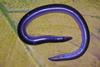
Caecilians
Caecilians are a group of limbless, serpentine amphibians. They mostly live hidden in the ground and in stream substrates, making them the least familiar order of amphibians.
-
 Features
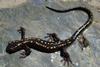
Salamanders
Salamanders are a group of amphibians typically characterized by a lizard-like appearance, with slender bodies, blunt snouts, short limbs projecting at right angles to the body, and the presence of a tail in both larvae and adults.
-
 Features
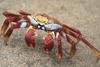
Arthropods
An arthropod is an invertebrate animal having an exoskeleton, a segmented body, and paired jointed appendages. Arthropods form the phylum Euarthropoda, which includes insects, arachnids, myriapods, and crustaceans.
-

-

-
 Features
Gorillas
Gorillas are ground-dwelling, predominantly herbivorous apes that inhabit the forests of central Sub-Saharan Africa. The genus Gorilla is divided into two species: the eastern gorillas and the western gorillas, and either four or five subspecies. They are the largest living primates
-

-
-
-
 Features
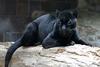
Jaguars
The jaguar is a wild cat species and the only extant member of the genus Panthera native to the Americas. The jaguar’s present range extends from Southwestern United States and Mexico in North America, across much of Central America, and south to Paraguay and northern Argentina in South America. ...
-

-
 Features
Negative emissions technology needed to head off climate change
The National Academies of Sciences, Engineering, and Medicine is calling on the US government to launch a concerted effort to develop new and improved negative emissions technologies to remove and sequester CO2 directly from the air. The panel concludes that these technologies, which involve chemical processes to capture carbon dioxide from the air, are economically viable and crucial to mitigate the threat of climate change.
‘We can now say that there is a high probability that we can produce a viable way to do direct air capture at something like $100 (£77) per tonne of CO2 or less,’ says Stephen Pacala, an ecology and evolutionary biology professor at Princeton University who chaired the committee that wrote the report. ‘We would then reach the capacities that the world would need to achieve the climate goals that are embedded in the Paris agreement and elsewhere,’ he tells Chemistry World. ‘It would also provide a way to continue to use fossil fuels, but without a climate impact – you could offset those carbon emissions.’ -
 Features
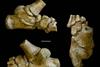
Foot of ‘world’s oldest child’ shows how our ancestors moved
More than three million years ago, a distant cousin called Australopithecus afarensis was walking around on two legs – marking a key chapter in the human story. But a new study of a rare A. afarensis toddler, published in Science Advances, suggests her feet retained some ape-like traits.
-
 News
NewsHurricane Michael insured losses pegged at $8bn
KCC’s flash estimate for Hurricane Michael includes losses to residential, commercial, and industrial properties as well as automobiles. The early estimate chimes with industry figures who privately estimated a $5bn-$10bn loss bill in the hours leading up to the Cat 4 storm making landfall, as reported by re-Insurance on 10 ...
-
 White papers
Headline Financials: Azimut
IBI Plus has posted an updated financial report for luxury yacht builder Azimut-Benetti showing continued revenue growth for Italy’s top shipyard over the past three years. Consolidated accounts for the financial year ending August 2016, indicate the Group’s turnover grew 1.8% to €694.5m for the year after posting 11.6% ...
-
 White papers
The inevitable policy response to climate change: when, what and how
Having considered the various potential drivers of an IPR, this paper further considers when the IPR could occur, what policy and technology pathways it might take, and how these pathways would affect the macroeconomy and risk-returns of financial assets.
-
 Research
Classic Pop Presents: Bowie - A Celebration
In this special 132 page magazine we chart the phenomenal career of one of pop music’s most influential artists: David Bowie. From his humble Bromley beginnings to what would be his final record: 2016’s Blackstar. cover and link The magazine features huge brand new features which give ...
-
 Research
Articles and white papers
Play More Than The Illiquidity Premium With Real Assets Real assets help achieving different needs through diversification, from inflation hedge, volatility dampener, to substitute to fixed income. We believe the macro economic and financial conditions appear very favourable to real assets in 2018. In the institutional world, we have witnessed ...
-